Why My Body Finally Found Balance Through Simple TCM Shifts
For years, I felt constantly drained—like my body was off-kilter no matter how much I rested. Western fixes helped temporarily, but the real shift came when I started listening to my body the way traditional Chinese medicine teaches. It wasn’t about quick fixes, but awareness: noticing patterns, adjusting habits, and working *with* my body, not against it. This is what changed everything. What began as a quiet curiosity grew into a daily practice of tuning in—observing how food, sleep, emotions, and routine shaped my energy. Slowly, the fog lifted. I stopped chasing symptoms and started understanding root causes. This is not a story of dramatic transformation, but of gradual realignment. And in that stillness, I found lasting balance.
The Wake-Up Call: When Fatigue Became Impossible to Ignore
There was a time when simply getting out of bed felt like a small victory. Mornings began with a deep sense of exhaustion, no matter how early I went to sleep. Coffee helped for an hour, maybe two, but by mid-afternoon, my thoughts would slow, my shoulders would tense, and the idea of preparing dinner felt overwhelming. I visited doctors, ran blood tests, adjusted my diet, tried different workouts—all in search of a solution. Some changes brought temporary relief, but nothing stuck. I was managing symptoms, not solving the problem.
It wasn’t until a close friend, long devoted to holistic wellness, gently suggested I look beyond lab results and consider how my body might be signaling imbalance in subtler ways. She introduced me to the idea of Qi—the vital energy that, in traditional Chinese medicine (TCM), flows through the body and supports all functions. According to TCM, when Qi is blocked, deficient, or out of balance, symptoms like fatigue, digestive discomfort, and mood fluctuations naturally arise. This wasn’t about disease; it was about disharmony.
The turning point came during a quiet conversation when she asked, “Do you ever feel like your body is trying to tell you something, but you’re not listening?” That question stayed with me. I began to pay attention—not just to how I felt, but to *when* I felt it. Why was my energy lowest on rainy days? Why did certain foods leave me sluggish, while others gave me a steady lift? These weren’t random occurrences. They were patterns. And for the first time, I saw health not as the absence of illness, but as a dynamic state of balance—one that required awareness, not just intervention.
Understanding TCM Adjustment: More Than Herbs and Acupuncture
When most people hear “traditional Chinese medicine,” they think of acupuncture needles or bottles of dried herbs. While these are important tools, they represent only a fraction of TCM’s comprehensive approach. At its core, TCM is a system of balance—rooted in the belief that the body, mind, and environment are deeply interconnected. Health is not achieved by suppressing symptoms, but by restoring harmony among these elements. Unlike Western medicine, which often targets specific conditions, TCM focuses on the individual as a whole, seeking to understand *why* an imbalance exists in the first place.
One of the most powerful shifts in my understanding came when I learned the difference between “treatment” and “adjustment.” In Western health models, treatment often means reacting to a problem—taking medication for high blood pressure, for example, or using antacids for acid reflux. TCM, by contrast, emphasizes *adjustment*—a continuous process of fine-tuning lifestyle, diet, and emotional habits to maintain equilibrium before issues arise. This preventive mindset reframed my entire relationship with health. Instead of waiting for something to go wrong, I began to view daily choices as opportunities to support my body’s natural rhythms.
Central to this approach are diagnostic methods like pulse and tongue reading. These are not used solely to identify disease, but as tools for self-awareness. A practitioner might observe a pale tongue with a thick coating or a weak, wiry pulse and interpret these as signs of Qi deficiency or digestive stagnation. But even without professional guidance, learning to notice these signals can be empowering. Over time, I began to check in with my own body—observing the color of my tongue each morning, noting the quality of my pulse when stressed, and tracking how these changed with diet or sleep. These weren’t clinical assessments; they were personal insights, helping me stay ahead of imbalance before it manifested as fatigue or discomfort.
Daily Rhythms: Aligning with Natural Cycles
One of the most profound teachings in TCM is the concept of the organ clock—a 24-hour cycle in which different organs are most active at specific times. For example, the liver is said to be most active between 1 a.m. and 3 a.m., a period when deep detoxification and emotional processing occur. The large intestine governs elimination between 5 a.m. and 7 a.m., making it an ideal time to awaken and encourage bowel movements. These rhythms aren’t mystical—they reflect real circadian biology, now validated by modern science.
When I first learned about the organ clock, I realized how much I had been working against my body’s natural timing. I often stayed up past midnight, ate dinner late, and hit snooze until 8 a.m., missing the optimal window for elimination and energy renewal. TCM teaches that living out of sync with these rhythms can disrupt Qi flow and lead to long-term depletion. So, I began making small, intentional shifts. I moved dinner earlier, aiming to eat by 7 p.m. I committed to waking by 6:30 a.m., drinking warm water upon rising to stimulate digestion, and spending the first 10 minutes of the day in quiet reflection rather than reaching for my phone.
The changes seemed minor, but the effects were noticeable within weeks. My digestion improved—bloating decreased, and bowel movements became regular. I felt more alert in the morning, without relying on multiple cups of coffee. Mental clarity returned, and I found myself making better decisions throughout the day. These weren’t dramatic breakthroughs, but steady improvements that compounded over time. By aligning my routine with natural energy flows, I stopped fighting my body and started cooperating with it. This simple act of synchronization became one of the most effective tools in my wellness journey.
Food as Information: Eating According to Your Body’s Needs
In Western nutrition, food is often reduced to calories, macros, and nutrients. While these metrics have value, TCM offers a different lens: food as *information* that communicates directly with the body. Every meal sends signals about temperature, energy, and balance. A cold smoothie might be nutrient-dense, but if your digestive system runs cool, it could slow metabolism and create internal dampness—a TCM term for sluggishness and fluid retention. A warm, cooked meal, by contrast, is easier to process and supports Spleen Qi, which governs digestion and nutrient absorption.
This shift in perspective changed how I approached eating. Instead of asking, “How many calories is this?” I began to ask, “How will this make my body feel?” I started noticing patterns. On cold, rainy days, I craved soups and stews—foods that warm the body and support circulation. In summer, I naturally gravitated toward cooling foods like cucumber and melon. These weren’t coincidences; they were my body’s way of seeking balance. TCM categorizes foods by their energetic properties—warming, cooling, neutral—and recommends eating according to both season and individual constitution.
For me, this meant making simple but meaningful adjustments. I replaced cold cereals and smoothies with warm oatmeal, congee, or sautéed vegetables for breakfast. I incorporated more seasonal produce—root vegetables in winter, leafy greens in spring. I began cooking with warming spices like ginger, cinnamon, and fennel, which support digestion and circulation. Portion size and timing also mattered. Eating smaller meals at regular intervals helped prevent Qi stagnation, while avoiding late-night eating allowed my digestive system to rest. These changes didn’t require strict diets or deprivation. They were practical, sustainable shifts that honored my body’s signals. Over time, my energy stabilized, cravings diminished, and I felt more grounded after meals—no longer weighed down or jittery.
Mind-Body Signals: Learning to Read Your Body’s Language
In TCM, emotions are not separate from physical health—they are integral to it. Chronic stress, for example, is seen as a major disruptor of Liver Qi, leading to tension, irritability, and even digestive issues. Sadness can weaken Lung Qi, affecting breathing and immunity. These connections aren’t metaphorical; they reflect the body’s intricate feedback system. When emotions are suppressed or prolonged, they create blockages that manifest as physical symptoms. The key is not to eliminate emotions, but to recognize them as signals—clues that something is out of balance.
Learning to read these signals required a shift in awareness. Instead of pushing through stress or numbing discomfort with distractions, I began to pause and ask, “What is my body trying to tell me?” A tense jaw in the evening might indicate unprocessed frustration. Frequent sighing could signal Qi stagnation. Poor sleep might reflect emotional unrest or digestive overload. Even the appearance of my tongue—once something I never noticed—became a daily barometer. A thick white coating suggested dampness or poor digestion. A red tip might point to heat or emotional tension. These weren’t diagnoses, but invitations to adjust.
To build this awareness, I created a simple daily check-in habit. Each evening, I spent five minutes reflecting: How was my energy today? What foods made me feel strong or sluggish? How did stress show up in my body? I didn’t aim for perfection—just presence. Over time, this practice helped me catch imbalances early. Instead of waiting for exhaustion to set in, I could adjust—take a walk after a heavy meal, sip ginger tea when I felt cold, or practice deep breathing when overwhelmed. This wasn’t about constant self-monitoring, but about cultivating a compassionate relationship with my body. By listening, I stopped reacting and started responding—with care, not crisis.
Gentle Movement and Stillness: Qigong and Rest That Restore
In a culture that glorifies intensity—high-intensity workouts, packed schedules, constant productivity—it can be hard to believe that less is more. But in TCM, overexertion is seen as a fast track to Qi depletion. While moderate exercise supports circulation and vitality, excessive or aggressive workouts can strain the body, especially if energy is already low. This doesn’t mean exercise is harmful—it means we must choose movement that nourishes rather than depletes.
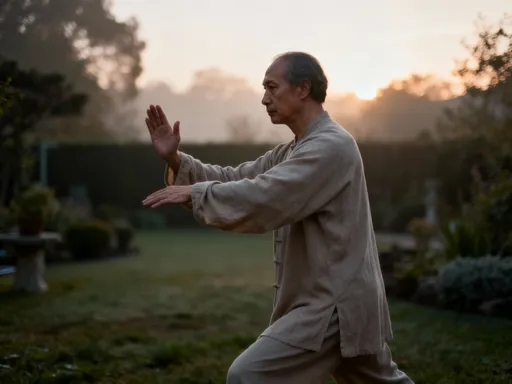
For me, this meant stepping away from long, intense cardio sessions and embracing gentler practices like qigong and mindful walking. Qigong, a centuries-old practice combining slow movement, breathwork, and meditation, is designed to cultivate and balance Qi. Just 10 minutes a day—standing in a relaxed posture, coordinating breath with gentle arm movements—can calm the nervous system, improve circulation, and restore mental clarity. Unlike strenuous workouts that leave me drained, qigong leaves me feeling centered and replenished.
Integrating these practices into a busy life required reframing rest as productive. Instead of viewing stillness as laziness, I began to see it as essential maintenance. I started with micro-practices: three deep breaths before answering emails, a two-minute stretch after sitting for an hour, a short qigong sequence before bed. These moments added up, creating pockets of calm throughout the day. I also prioritized true rest—lying down without screens, allowing my body to reset. Over time, I noticed a shift: my energy became more resilient. I could handle demands without collapsing afterward. This wasn’t about doing more—it was about restoring what had been lost through constant output. In the quiet, I found strength.
Making It Last: Building a Sustainable TCM-Inspired Lifestyle
Sustainability is the foundation of any lasting change. In the early days of my TCM journey, I made the mistake of aiming for perfection—eating perfectly, meditating daily, following every recommendation without flexibility. Predictably, I burned out. What I learned is that consistency matters more than intensity. Small, repeatable actions—drinking warm water in the morning, eating dinner early, checking in with my body—have a cumulative effect. They don’t require heroic effort, but they do require presence.
Today, my lifestyle blends TCM principles with modern realities. I stay hydrated, but I choose warm or room-temperature water over ice-cold drinks, which TCM teaches can shock the digestive system. I limit screen time, especially before bed, to protect my Shen (spirit) and support restful sleep. I take short breaks during work to stretch and breathe, honoring the body’s need for movement and stillness. These aren’t rigid rules—they’re flexible guidelines that help me stay in tune.
At the same time, I recognize the limits of self-care. While daily habits are powerful, there are times when professional guidance is essential. If fatigue persists despite lifestyle changes, or if digestive issues worsen, it’s important to consult a qualified TCM practitioner or healthcare provider. Self-adjustment is not a substitute for medical diagnosis, especially in cases of chronic or severe conditions. TCM works best when integrated with other forms of care, not in isolation. The goal is not to replace modern medicine, but to complement it with a deeper understanding of balance.
Conclusion
This journey wasn’t about overhauling my life overnight, but gradually tuning in. TCM didn’t give me a cure—it gave me awareness. By learning to adjust small things consistently, I found a resilience I didn’t know I had. It’s not magic, but it is transformative. And the best part? It’s accessible to anyone willing to listen. You don’t need special equipment, expensive treatments, or hours of free time. You just need curiosity and a willingness to pay attention. Your body is already speaking—through your energy, your digestion, your emotions, your sleep. The wisdom of TCM is not in fixing what’s broken, but in learning to hear what’s already there. When you start aligning with your natural rhythms, eating with intention, moving gently, and resting deeply, balance isn’t something you achieve—it’s something you return to, again and again. And in that return, you find not just health, but a deeper sense of harmony with yourself and the world around you.