You Won’t Believe What Bordeaux’s Architecture Hides—Wait Until You See #3
When I first wandered through Bordeaux, I expected wine and cobbled streets—but not this. The city’s architecture hit me like a bolt of lightning: golden limestone glowing in the sun, 18th-century masterpieces standing shoulder-to-shoulder, and hidden courtyards whispering secrets of the past. This isn’t just old stone—it’s a living story. Let me take you where guidebooks don’t, to the soul of a city built on beauty, balance, and a little-known urban revolution.
The Golden Glow of Bordeaux: A City Carved in Stone
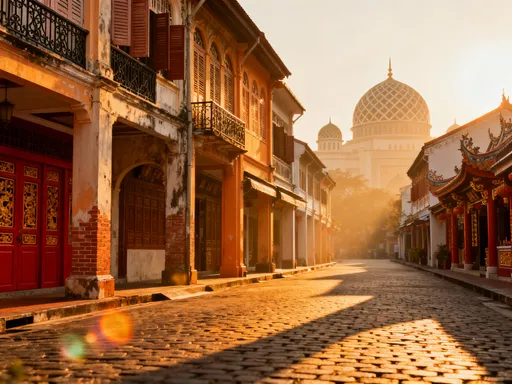
Bordeaux is often called La Belle Endormie, or The Sleeping Beauty, a name that captures both its elegance and the long period during which its architectural treasures lay quietly preserved beneath layers of soot and neglect. What awakens this beauty is the stone itself—creamy, luminous limestone known locally as Pierre de Bordeaux. Quarried from the nearby Blaye and Bourg regions along the Gironde estuary, this sedimentary rock has defined the city’s aesthetic for over two centuries. Its warm hue shifts with the light: pale gold at dawn, radiant amber at midday, and soft rose at sunset, giving the entire city center a unified, dreamlike glow.
The widespread use of stone was not always the norm. In the early 18th century, much of Bordeaux was still built from timber and half-timbered structures, vulnerable to fire. A series of devastating blazes, particularly the Great Fire of 1771, exposed the dangers of wooden construction in a densely populated port city. In response, city planners mandated stone as the primary building material. This shift marked a turning point—not only for safety but for identity. Stone offered durability, dignity, and a sense of permanence. Architects embraced it with fervor, crafting façades with precise proportions, delicate carvings, and harmonious symmetry that reflected the ideals of the Enlightenment.
Walking through central Bordeaux today, one senses the intentionality behind every block. The stone does more than decorate—it unifies. Entire neighborhoods flow together as if designed by a single hand, creating a visual continuity rare among European cities. Unlike Paris, where architectural styles clash across arrondissements, or London, where brick and stone alternate unpredictably, Bordeaux feels like a composed symphony. The limestone acts as a sonic thread, tying together centuries of urban development into a coherent whole. This material choice was not merely practical; it was poetic, shaping a city whose beauty arises as much from restraint as from ornament.
UNESCO’s Urban Masterpiece: Why the Entire Center Is Protected
In 2007, UNESCO inscribed the heart of Bordeaux on its World Heritage list—not for a cathedral, palace, or fortress, but for something far more profound: an entire urban ensemble. This distinction recognizes that Bordeaux’s true masterpiece is not a single monument but the collective harmony of its streets, squares, and buildings spanning three centuries of architectural evolution. The designation covers more than 347 hectares, making it one of the largest protected urban areas in Europe. What sets it apart is the seamless integration of classical, neoclassical, and early modern design within a human-scaled, walkable environment.
At the core of this recognition is the city’s Enlightenment-era transformation. Under the direction of royal intendants like Louis-Urbain de Guerin d'Orgeval and later Joseph Antoine de Tourny, Bordeaux underwent a radical redesign in the mid-1700s. Inspired by rationalist ideals, planners replaced narrow medieval lanes with wide boulevards, aligned buildings along strict axes, and created open squares that allowed light, air, and civic life to flourish. The result was a city that balanced grandeur with livability—a place where commerce, culture, and daily routines coexisted in elegant equilibrium.
Districts such as Place de la Bourse, Quartier des Chartrons, and the Rue Sainte-Catherine corridor exemplify this vision. In Chartrons, once home to wealthy wine merchants, elegant townhouses line tree-shaded avenues, their façades adorned with wrought-iron balconies and sculpted pediments. The area retains its historic function as a center of trade, now hosting antique markets and art galleries. Meanwhile, the sweeping arc of Place de la Comédie frames the Grand Théâtre, a neoclassical jewel inspired by ancient Roman temples. Each of these spaces contributes to a larger narrative: that urban beauty is not accidental but the product of foresight, discipline, and civic pride.
UNESCO’s recognition also underscores Bordeaux’s role as a model of sustainable preservation. Rather than freezing the city in time, the designation encourages adaptive reuse—allowing historic structures to serve modern needs without losing their character. This philosophy ensures that the protected zone remains vibrant, not a museum but a living, evolving cityscape where residents and visitors alike participate in its ongoing story.
Place de la Bourse and the Miroir d’Eau: Modern Meets Classic
No site in Bordeaux better illustrates the dialogue between past and present than Place de la Bourse and its celebrated Miroir d’Eau, or Water Mirror. Constructed between 1730 and 1775 under the direction of architect Ange-Jacques Gabriel, the square was originally named Place Royale, a symbol of royal power and civic ambition. Its symmetrical façades, with arcaded ground floors and sculpted capitals, reflect the ideals of French classicism—order, proportion, and restraint. The central axis once pointed toward the river, though siltation gradually pushed the shoreline further away, leaving the square visually disconnected from the Garonne.
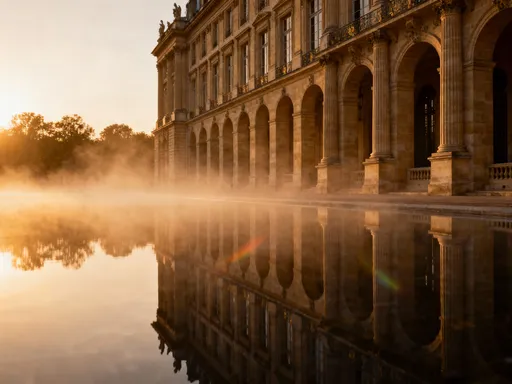
That changed in 2006 with the installation of the Miroir d’Eau, a shallow reflecting pool spanning 3,450 square meters in front of the square. Designed by artist Michel Corajoud and landscape architect Michel Péna, the installation reconnected the city to its riverfront in a way that is both poetic and functional. Twice daily, the mirror fills with a thin layer of water, creating a flawless reflection of the 18th-century buildings behind it. The effect is breathtaking—the stone façades appear to float in reverse, doubling the grandeur of the square in shimmering symmetry.
But the Miroir d’Eau is more than a visual trick. Every ten minutes, the water drains completely, revealing a dark granite surface that slowly fogs with mist. This cyclical transformation invites interaction: children run through the mist, couples pose for photos, and tourists dip their feet in the cool runoff. It turns a formal civic space into a dynamic public experience, where history is not just observed but felt. The design respects the past while insisting on relevance—proof that modern interventions can enhance rather than disrupt heritage.
The success of the Miroir d’Eau has inspired similar projects across Europe, but few achieve its balance of simplicity and impact. It demonstrates that contemporary architecture need not compete with the old; it can instead amplify it. In Bordeaux, this philosophy extends beyond the square—into tram lines that glide silently past stone façades, and lighting designs that highlight architectural details without overpowering them. The city does not resist modernity; it curates it.
Hidden Courtyards and Secret Passages: The City’s Quiet Heart
Beyond the grand façades and sunlit squares lies another layer of Bordeaux—quieter, more intimate, and often invisible to the casual observer. Tucked behind unmarked doors and narrow passageways are the hôtels particuliers, private mansions built by wealthy merchants, magistrates, and aristocrats during the 17th and 18th centuries. These urban palaces were designed not for public display but for private retreat, their splendor concealed within inner courtyards, gardens, and ornate stairwells.
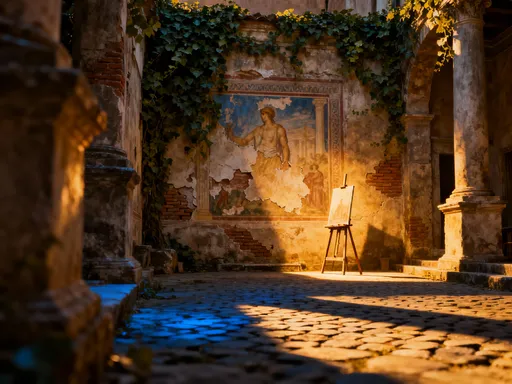
One need only step through a heavy wooden door to be transported. Inside, courtyards are framed by wrought-iron railings, spiral staircases, and sculpted keystones. Some retain their original fountains, while others have been converted into tranquil garden spaces with climbing ivy and potted citrus trees. The architecture blends Baroque drama with Rococo delicacy—scrollwork on balconies, gilded doorframes, and vaulted ceilings painted with floral motifs. These spaces were designed for contemplation, conversation, and the private rituals of elite life.
Though many hôtels particuliers remain private residences, several open their doors during European Heritage Days in September, offering rare access to the public. Others have been repurposed as cultural centers, embassies, or boutique hotels. The Hôtel de Ville, originally a private mansion, now serves as Bordeaux’s city hall, its courtyard open for quiet strolls. The CAPC Musée d'Art Contemporain, while housed in a former warehouse, is located near several preserved mansions that can be glimpsed from public alleys.
Exploring these hidden spaces requires curiosity and a slower pace. They are not marked on most tourist maps, and their entrances often blend into the streetscape. But for those who seek them, they offer a deeper understanding of Bordeaux’s social history—the contrast between public restraint and private opulence, between civic uniformity and individual expression. They remind us that the city’s beauty is not only in what it shows but in what it conceals.
From Wine Warehouses to Cultural Hubs: Adaptive Reuse in Action
The banks of the Garonne River once pulsed with the rhythm of trade, lined with massive entrepôts—stone and brick warehouses where wine from surrounding vineyards was stored before export. These industrial structures, built between the 17th and 19th centuries, were functional rather than decorative: thick walls to regulate temperature, high ceilings for ventilation, and large doors for loading barrels. For decades, they stood abandoned as trade patterns shifted and the port moved downstream.
Beginning in the 1970s, Bordeaux began a quiet revolution in urban renewal, transforming these forgotten spaces into centers of culture and innovation. The most iconic example is the CAPC Musée d'Art Contemporain, established in 1973 within a former colonial goods warehouse. The building’s raw architecture—exposed brick, timber beams, and iron columns—was preserved rather than hidden. Minimalist white galleries were inserted like delicate layers within the industrial shell, creating a powerful contrast between old and new.
The success of CAPC inspired similar projects across the riverfront. The Hangar 14 cultural venue, once a customs storage facility, now hosts exhibitions and performances. The Bassins à Flot district has been redeveloped into a mixed-use neighborhood where historic warehouses house apartments, cafés, and design studios. Even the old port crane has been preserved as a sculptural landmark.
This approach to adaptive reuse reflects a broader philosophy: that history need not be sacrificed for progress. Instead, the past can be a foundation for the future. The preserved materials—weathered brick, rusted iron, worn stone—tell stories of labor, trade, and transformation. By integrating them into modern life, Bordeaux avoids the sterility of new construction while preventing the stagnation of preservation. The result is a city that feels both rooted and dynamic, where every renovation is a conversation across time.
18th-Century Urban Planning: The Vision Behind the Beauty
The elegance of Bordeaux’s center is not accidental; it is the legacy of a deliberate and visionary urban plan conceived during the Age of Enlightenment. At its heart was Joseph Antoine de Tourny, intendant of the province from 1743 to 1755, who oversaw a sweeping transformation of the city. Influenced by rationalist philosophy and the grand planning of cities like Versailles, Tourny sought to create a capital worthy of Bordeaux’s growing wealth and influence.
His plan introduced wide, straight boulevards—such as the Cours de l'Intendance and Cours Clemenceau—that allowed for better circulation, improved sanitation, and dramatic visual perspectives. Buildings were aligned to create axial views, drawing the eye toward key monuments like the Palais de la Bourse and the Cathedral of Saint-André. Elevations were raised in flood-prone areas, a practical measure that also created terraced promenades with panoramic views of the river.
Perhaps most revolutionary was the emphasis on public space. Tourny understood that a city’s beauty must serve its people. He expanded squares, planted trees, and installed street lighting—luxuries at the time. He also mandated architectural uniformity along major avenues: façades had to adhere to height limits, rooflines, and material standards, ensuring visual harmony without stifling individual craftsmanship.
This foresight had lasting impact. Unlike cities that expanded chaotically in the 19th century, Bordeaux retained its human scale and aesthetic coherence. The wide boulevards now accommodate trams and cyclists, the tree-lined avenues offer shade in summer, and the elevated promenades remain popular walking routes. Tourny’s vision was not merely aesthetic—it was deeply functional, anticipating needs that would not become urgent for another two centuries. Today, urban planners study Bordeaux as a model of sustainable, people-centered design—a city where beauty and utility are not opposites but allies.
Walking the Architectural Timeline: A Stroll from Past to Present
To truly understand Bordeaux’s architectural magic, one must walk it. A suggested route begins at Place de la Comédie, home to the Grand Théâtre, its Corinthian columns and gilded statues glowing in the afternoon light. From here, stroll down Rue Sainte-Catherine, one of Europe’s longest pedestrian streets, where 18th-century shopfronts house modern boutiques beneath stone arches.
Continue toward Place de la Bourse, where the Miroir d’Eau offers a moment of reflection—literally and figuratively. Cross the Pont de Pierre, Napoleon’s first bridge over the Garonne, its 17 stone arches echoing Roman engineering. On the left bank, the transformed warehouses of Bassins à Flot reveal how industrial heritage can be reborn as residential and cultural space.
Return via the contemporary tram line, whose sleek glass-and-steel stops contrast with the surrounding stone. Notice how the design avoids competition—instead, the transparency of the shelters allows the historic backdrop to remain dominant. This is Bordeaux’s quiet genius: modernity without arrogance, innovation without erasure.
End at the Quai des Marques, where open-air terraces overlook the river. As the sun sets, the limestone façades ignite once more in golden light, and the reflections dance on the water. Each step of the journey reveals a new layer—medieval foundations beneath neoclassical façades, hidden courtyards behind public streets, industrial bones beneath artistic rebirth. This is not a city frozen in time, but one in constant, graceful conversation with its past.
Bordeaux’s architecture isn’t frozen in time—it’s a continuous conversation between centuries. Its beauty lies not just in grand façades, but in the harmony of human scale, material honesty, and urban grace. To walk here is to witness how a city can honor its past while moving forward, one sunlit stone at a time.