You Won’t Believe What I Found in Switzerland’s Hidden Alpine Paradise
Have you ever stood somewhere so untouched it feels like the world stopped just to let you breathe? That’s Grindelwald’s protected alpine magic. Nestled in the Swiss Alps, this region isn’t just postcard-perfect—it’s preserved by strict conservation efforts that keep nature wild and authentic. I went there seeking views, but found something deeper: a living landscape where every trail, valley, and glacier reminds you why protected areas matter—not just for scenery, but for our soul.
Arrival in Grindelwald: First Impressions of a Mountain Haven
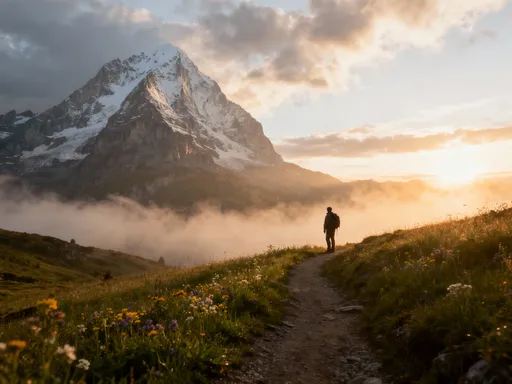
The journey to Grindelwald begins with a shift in rhythm. As the train departs Interlaken and climbs steadily into the high Alps, the modern world fades behind—no billboards, no traffic noise, only the quiet hum of electric rails and the occasional chime of cowbells echoing from green slopes. The route passes through the Jungfrau-Aletsch region, a UNESCO World Heritage site recognized for its geological significance and pristine alpine ecosystems. Through the window, jagged peaks rise like ancient sentinels, their snow-capped summits glowing under the morning light. The Eiger North Face looms ahead, its sheer rock face both awe-inspiring and humbling.
Stepping off the train in Grindelwald, the air is crisp and clean, carrying the scent of pine and damp earth. There is a stillness here that city dwellers rarely experience—a silence broken only by the wind, the trickle of mountain streams, and the distant clang of grazing cattle wearing traditional brass bells. It’s not just scenic beauty that strikes you; it’s the sense of being in a place where nature still sets the rules. This is not a theme park version of the mountains. It’s the real thing, carefully preserved.
Grindelwald lies within the Swiss Federal Inventory of Landscapes and Natural Monuments (Bundesinventar der Landschaften und Naturdenkmäler, or BLN), a nationwide framework that identifies and protects areas of exceptional natural value. These protections are not symbolic. They come with enforceable regulations on construction, land use, and tourism development. As a result, the village maintains its traditional chalet architecture, and high-impact infrastructure like large hotels or cable cars is carefully limited. This balance allows visitors to experience the Alps as generations before have known them—wild, majestic, and deeply peaceful.
The Science Behind the Scenery: How Protection Preserves Beauty
Beneath Grindelwald’s breathtaking vistas lies a rigorous system of environmental stewardship. The BLN, established in 1977 and updated regularly, classifies over 160 landscapes across Switzerland based on ecological integrity, scenic value, and cultural significance. Areas within the inventory, like the valleys surrounding Grindelwald, are legally protected from urban sprawl, industrial activity, and disruptive tourism projects. This ensures that even as visitor numbers grow, the core character of the landscape remains intact.
One of the most effective tools in this system is zoning. Certain zones prohibit any construction, while others allow only minimal development compatible with the natural environment. For example, new buildings must adhere to strict height limits, use local materials like wood and stone, and blend into the terrain. These rules prevent the kind of visual clutter seen in less-regulated mountain resorts. Additionally, tourism is managed through designated trails and access points, which helps prevent erosion and habitat fragmentation.
Biodiversity thrives under this framework. The region supports over 1,500 plant species, including rare alpine flowers like the edelweiss, which was once overharvested by tourists but now flourishes under protection. Animal populations have also rebounded. The Alpine ibex, once hunted to near extinction, now roams freely in the higher elevations, a testament to successful conservation. Seasonal closures of certain trails during breeding and birthing periods further protect sensitive species like marmots and golden eagles. These measures are not arbitrary—they are based on long-term ecological monitoring and scientific research conducted by Swiss environmental agencies.
The result is a landscape that feels timeless, not because it is frozen in the past, but because it is actively cared for. The beauty of Grindelwald is not accidental. It is the outcome of decades of policy, community commitment, and respect for natural limits.
Hiking Through Protected Zones: Trails That Tell a Story
Walking the trails around Grindelwald is like reading a living history of the Alps. Each path unfolds a new chapter—glacial valleys carved by ice, meadows bursting with wildflowers, and ridgelines offering panoramic views of the Bernese Oberland. Two of the most iconic routes, the Eiger Trail and the Panorama Trail, run through protected corridors, ensuring that hikers experience nature in its most authentic form.
The Eiger Trail begins at the Eigergletscher station and descends along the base of the Eiger’s imposing north face. The path is narrow and rocky in places, clinging to the mountainside with wooden railings for safety. What makes this trail special is not just the proximity to one of the world’s most famous peaks, but the sense of immersion. There are no guardrails blocking the view, no loudspeaker announcements—just the wind, the crunch of gravel underfoot, and the occasional cry of a raven overhead. Along the way, hikers pass through zones where vegetation is left to grow naturally. Delicate alpine plants like gentians and saxifrages cling to crevices in the rock, surviving in harsh conditions thanks to minimal human disturbance.
Further along, near the Kleine Scheidegg pass, the Panorama Trail offers sweeping views of the Wetterhorn, Mönch, and Jungfrau peaks. This route is slightly wider and more accessible, but still follows strict environmental guidelines. Boardwalks cross fragile wetland areas to prevent soil compaction, and signs in multiple languages remind visitors to stay on the path. It’s common to spot Alpine ibex perched on distant cliffs, their curved horns silhouetted against the sky. Marmots, the playful sentinels of the high meadows, whistle warnings from their burrows, undisturbed by crowds due to regulated access.
What stays with you after these hikes is not just the scenery, but the feeling of being a guest in a world that does not exist for human entertainment. There are no souvenir stands on the trail, no loud music, no commercial distractions. Instead, there is a quiet reverence—for the land, for the animals, for the centuries of people who have lived in harmony with these mountains. This is not tourism as consumption. It is travel as connection.
Staying Sustainable: Eco-Friendly Lodging and Local Choices
A trip to Grindelwald is not only about where you go, but how you stay. Accommodations in the region reflect a deep commitment to sustainability, with many hotels and guesthouses certified under Switzerland’s environmental standards for tourism. These properties use renewable energy sources such as solar panels and hydropower, minimize waste through composting and recycling programs, and prioritize energy efficiency in heating and lighting.
One family-run guesthouse near the village center, for example, heats its water with solar thermal systems and sources nearly all its food from local farms. Breakfast includes fresh mountain cheese, organic yogurt, and bread baked daily with grain grown in nearby valleys. Even the toiletries in the rooms are biodegradable, and linens are changed only upon request to conserve water. These small choices add up, reducing the environmental footprint of each guest while supporting the local economy.
Dining in Grindelwald is another opportunity to make sustainable choices. Many restaurants proudly list the origins of their ingredients, highlighting dairy from alpine pastures where cows graze during the summer months. This seasonal transhumance—moving livestock to high-altitude meadows—is a centuries-old tradition that maintains biodiversity by preventing overgrowth of certain plant species. By choosing meals made with local cheese, meat, and vegetables, visitors directly support this ecological balance.
Guest behavior also plays a crucial role. Signs throughout the village encourage the use of public transportation, and most visitors comply, relying on electric shuttles and trains rather than private cars. Recycling bins are clearly marked, and littering is extremely rare—a reflection of both strict enforcement and cultural norms. In Grindelwald, sustainability is not a marketing slogan. It is a shared responsibility, quietly practiced by residents and visitors alike.
Beyond the Postcard: Less-Known Spots Within the Protected Landscape
While the Eiger Trail and Jungfraujoch attract the most visitors, some of the most profound experiences in Grindelwald happen off the beaten path. One such place is Grosse Scheidegg, a high mountain pass accessible by foot or a vintage open-air bus that runs seasonally. On a quiet morning in early summer, the valley below unfolds in layers of green and gold, dotted with grazing cattle and cradled by towering peaks. There are no souvenir shops here, no long lines—just the sound of a distant waterfall and the rustle of grass in the breeze.
Another hidden gem is Bachalpsee, a small alpine lake that mirrors the surrounding peaks like a glass panel set into the earth. Reaching it requires a moderate hike from the Gondelbahn Grindelwald-First station, which naturally limits the number of daily visitors. Because of its elevation and fragile surroundings, the area around the lake is strictly protected. Boardwalks guide hikers around the shore, preventing trampling of delicate mosses and lichens that take decades to grow.
These quieter locations remain pristine not by accident, but by design. Access is limited, trails are well-marked but not overdeveloped, and visitor education is prioritized. Rangers occasionally patrol the area, offering friendly reminders about staying on the path and not feeding wildlife. The result is a rare kind of solitude—being alone in nature without feeling unsafe, immersed in beauty without the pressure to capture it for social media.
For travelers seeking authenticity, these spots offer a deeper kind of reward. They remind us that the most meaningful experiences are often the quietest—the moment a marmot pops its head from a burrow, the way sunlight hits a glacier at dawn, the feeling of standing in a place so untouched it feels sacred. Respecting these spaces means leaving them exactly as we found them, so others may have the same chance to be moved.
Challenges of Popularity: Balancing Access and Preservation
Despite its protections, Grindelwald faces a growing challenge: its own popularity. Each year, hundreds of thousands of visitors arrive by train, drawn by the fame of the Eiger and the accessibility of the Jungfraujoch railway. While tourism supports the local economy, it also puts pressure on trails, wildlife, and infrastructure. Erosion from heavy foot traffic, litter in remote areas, and disturbances to nesting birds are real concerns that authorities must address.
To manage this, local officials have implemented a series of smart, low-impact solutions. Shuttle buses reduce the need for private vehicles, and timed entry systems for popular sites like the First Cliff Walk help prevent overcrowding. Trail maintenance crews work year-round to repair damaged paths and install erosion barriers. Signage in German, English, and other languages educates visitors about responsible behavior, from packing out trash to keeping a safe distance from animals.
Another key strategy is visitor redistribution. By promoting lesser-known trails and viewpoints, authorities encourage people to explore beyond the main attractions. Interactive maps at train stations and visitor centers highlight alternative routes, often leading to equally stunning but quieter destinations. This not only reduces pressure on hotspots but enriches the visitor experience, offering a more personal connection to the landscape.
Yet the ethical dilemma remains: how do we share the beauty of places like Grindelwald without destroying them? There is no perfect answer, but the Swiss model suggests that balance is possible through thoughtful planning, community involvement, and a culture of respect. Every visitor has a role to play—not just by following rules, but by adopting a mindset of stewardship. The mountains do not belong to us. We are merely passing through.
Why This Matters: The Bigger Picture of Protected Areas
The story of Grindelwald is not just about one village in the Swiss Alps. It is a blueprint for how protected areas can thrive in the 21st century. Around the world, natural landscapes face unprecedented threats—from climate change to unchecked development. Yet places like Grindelwald prove that with strong policies, community engagement, and visitor cooperation, it is possible to preserve beauty while allowing people to experience it.
Protected areas serve more than ecological functions. They are sanctuaries for the human spirit. In a fast-paced, digital world, they offer stillness, perspective, and a reminder of our place within nature. Studies have shown that spending time in natural environments reduces stress, improves mental clarity, and fosters a sense of connection. When we protect landscapes like Grindelwald, we are not just saving trees and glaciers—we are safeguarding spaces where people can heal, reflect, and rediscover wonder.
Moreover, personal experiences in these places often spark lasting environmental awareness. A woman who sees her first ibex in the wild may later support conservation causes. A family that hikes a protected trail may teach their children to respect nature. These individual moments, multiplied across millions of visitors, can lead to broader cultural shifts toward sustainability.
The Swiss model demonstrates that protection does not mean exclusion. It means thoughtful inclusion—welcoming people in, but on nature’s terms. This balance is delicate, but essential. As global travel rebounds and more people seek escape in nature, the lessons from Grindelwald become increasingly relevant. We must ask not only where we want to go, but how we want to be there.
Grindelwald isn’t just a destination—it’s a lesson in harmony. Its protected areas don’t merely shield mountains; they safeguard a way of being. When we choose to visit mindfully, we don’t take from nature—we become part of its future. So next time you plan a trip, ask: will you leave only footprints? Or will you help keep places like this alive for generations? The mountains are watching.